
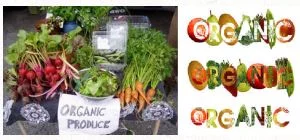
Organic Vs. Conventionally Grown Food
I am looking at the January 28th, 2014 edition of The St. Lawrence Plaindealer. (Ok, I wrote this over 2 years ago... where does the time go? and never posted it.) The FARM FOCUS section has an article titled: "Important to Properly Clean Produce." The last paragraph, in this short article, had this statement: The Pure Food Growers of America states that the average American consumes more than 10 pounds of insecticides and herbicides every year from produce.
Their answer to this consuming pesticide problem is in the article’s title:
"Important to Properly Clean Produce"
I have a few ideas of my own around this “just wash it off” issue. Is it really just a matter of washing the produce well? This sounds like a good plan, on the surface. However, when we think about chemicals and the permeability of the produce’s skin and the soil the produce is grown in, the actual picture looks a bit different.

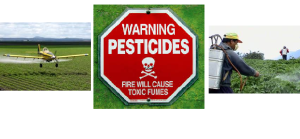
I am looking at the January 28th, 2014 edition of The St. Lawrence Plaindealer. (Ok, I wrote this over 2 years ago... where does the time go? and never posted it.) The FARM FOCUS section has an article titled: "Important to Properly Clean Produce." The last paragraph, in this short article, had this statement: The Pure Food Growers of America states that the average American consumes more than 10 pounds of insecticides and herbicides every year from produce.
Their answer to this consuming pesticide problem is in the article’s title:
"Important to Properly Clean Produce"
I have a few ideas of my own around this “just wash it off” issue. Is it really just a matter of washing the produce well? This sounds like a good plan, on the surface. However, when we think about chemicals and the permeability of the produce’s skin and the soil the produce is grown in, the actual picture looks a bit different.
Washing produce is a good idea but will not remove toxic agricultural chemicals. While it may reduce the surface residue, any chemicals sprayed directly onto the food are absorbed directly into the plant.
Take an apple tree, for example. If you spray that tree, the apples get direct chemical application and the ground around the tree is also contaminated with the chemicals. The chemicals are absorbed through each apple’s skin. Much the same process that happens if you were to put the chemical directly onto your own skin, it is absorbed directly into your whole body.
The chemicals that end up on the ground, around the tree, are absorbed into the soil. This is the same soil that the tree’s roots are in. When the roots are absorbing nutrients and moisture from the soil, the chemicals also get absorbed.
Every cell of the tree, and all of the apples on the tree, are exposed to and contain these toxic chemicals.
This same process happens with root vegetables (say, carrots) growing underground. Spray the soil with pesticides, fungicides, herbicides, etc., and the carrot will absorb these same chemicals right out of the ground. When that carrot is growing and taking in soil nutrients and moisture, it does not selectively avoid the pesticides. The end result on the full grown carrot is not merely surface contamination on your produce.
No amount of washing the surface of an apple, carrot, or any other produce is going to wash off the chemicals that have entered every cell of that organism.
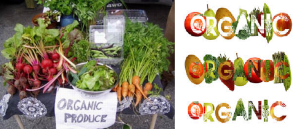
Buy organic: fewer chemicals and better nutritional value. While organic foods seem to cost more, at the cash register, than conventionally grown foods, the value of organics cannot be stressed enough. Foods grown organically, naturally, have higher nutritional values. Plants and other animals react to natural foods and natural living in the same manner: their bodies are healthy and whole! When plants and animals are raised organically, their cellular health is intact. This is the kind of food you want to put into your body; food that is healthy and intact, right down to the cellular level. Your body will be in better nutritional health when you treat it naturally with whole foods, grown without chemicals, and make the choice to live a whole health lifestyle.
Think about biology, cell regeneration, your internal nutritional savings account; all are good reasons to put whole, organic nutrition into your body. You will save money, yes, long after you walk away from the cash register, by preventing disease and avoiding the need for invasive medical intervention.

Buying organic food is worth the price at the cash register. What we spend now, on good food, will prevent us from spending money later on medical treatments. To make organic food more cost effective: find local farmers and buy directly from those farmers. You avoid paying all the “middle men” who are making money getting your food from the farms to the supermarket. You can also find farmers who may not be USDA organic certified but adhere to sustainable growing practices. This farmer will sell produce at a lower price than USDA certified organic food. Ask; most farmers will graciously share their growing practices with you.
Environmental Working Groups' list of 53 produce items from most to least contaminated: http://www.ewg.org/foodnews/list/ Use this list to help decide what produce is best to invest in organically grown, if purchasing 100% organic produce is not possible.
Buy the very best food you can.
Bottom Line:

Wild Leeks & Wild Child!
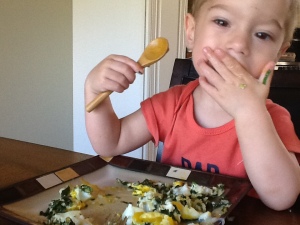
My youngest buddy, eating his morning, local eggs with wild leeks! His body is being infused with the nourishing goodness of wild foods.
- Wild foods have their genetics intact, non- GMO! This is a huge boost in your personal cell nourishment arena.
- Wild foods are grown in soil that generally has not been disturbed by agricultural chemicals: pesticides, fungicides, herbicides, synthetic fertilizers, on & on & on... if chemicals are in the soil, they are in every cell of your food (despite the "just wash it off" campaign of Big Ag.) Support local farmers who opt to not use chemicals.
- The soil, in the wild, is naturally composting, year after year. This continual composting cycle keeps the soil's nutrients high. Foods grown in this soil, well, are naturally high in minerals.
There is so much more to be said for food being grown in its natural environment, living and growing the way it would without human intervention. Growing food naturally, even when we cultivate it, raises the nourishment level by leaps and bounds.
Looking for local food, raised naturally? Don't want to grow it yourself OR forage in the woods? Get on this website and find a local farmer. who will love you up with good food and you can support their desire to produce good food. It's a win-win relationship!
Want to help others enjoy well raised, local food? The healthier people we have in our communities, the healthier our communities will be. It takes a community to raise a community!
The gift of good food is the best gift you can give. (in my opinion!)
I have pasted GardenShare's request for CSA Bonus Bucks support below.
Eat well, share good food, love people. Paula
CSA Bonus Bucks Needs Your Help!

Hello Friends,
GardenShare's CSA Bonus Bucks offers low-income families an opportunity to join the CSA of their choice with a $100 discount.
This year we've been overwhelmed with requests, and do not have the funding to cover five families who came in just as we had spent the final funds for the year. Some of these families have enjoyed this program for several years.
CSA Bonus Bucks works double duty by helping low income families enjoy great, healthy, local food, while at the same time, supporting our local farmers with additional business.
Any donation will help. Simply follow this link.
If you prefer, you can still send a check to
GardenShare, PO Box 516, Canton, NY 13617
