
Longing for the Wild Ones: Nature's Medicine!

Every year I find myself in this same space: longing for the wild foods of spring. Above I am digging leeks on 4/16/13 and the field of leeks and box of leeks pictures are from 2014. I am anxiously waiting for the leeks to pop their 'lil green heads up again this year.
The return of the leeks means many things to me:
- spring IS here,
- summer will follow sooner than the wait from winter to spring (so grateful for this!),
- more wild foods and flowers will be popping out of the ground daily, and
- my body is in sync with nature!
Wild leeks are nature's medicine. (Who am I kidding? All wild plants are nature's medicine!) They have similar healing qualities of garlic: immune boosting, good for blood pressure, a blood and spring tonic, cold and flu remedy, and the leaf and bulb juice is good for ear aches and infections.
Wild foods are the gifts that our bodies need after a long cold winter. They provide green food, vitamin C (and so many more vitamins and minerals), stimulation of the liver to open and cleanse the heaviness of winter out of our digestive tract and ultimately our body cells, and vital life force energy to up our internal level of vibrancy.
Soon to look for:
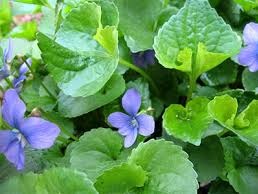
Violet leaves and flowers
Violets are rich in vitamin C, a much needed vitamin after a long winter. Vitamin C helps in the spring detox and the upward movement of life force energy. Violets are rich in enzymes, chlorophyll, vitamin A, carotenes, rutin (helps maintain blood vessel strength and integrity), and many more nutrients.

Young Nettles
Nettles are, by far, my favorite plant (and I love all the plants!). It is one herb I would add to every herbal healing blend for its nutritive properties. Nettles nourishes each and every body cell, helps to build strong bones, nourishes the glandular system, aid the reproductive tract (pms, migraines, prostate, libido builder), great for allergies and asthma, and just about any and every ailment I can think of. This is because of nettles high nutritional value; when the body is nourished the body heals!
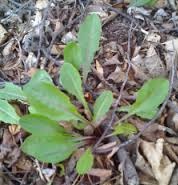
Young Dandelion
Um, Um Yum... dandelion greens and think liver. Dandelion is a bitter tonic for the liver helping with digestion and helping with the spring cleanse out of winter heaviness in our cells and life force energy. Dandelion is very high in nutrients (again, good for cellular health and build bones), is a mild laxative, and is good for skin conditions to name but a few of dandelion's virtues. Spring brings us this flower and the leaves to eat at just the time our body needs it. Nature is so wise!
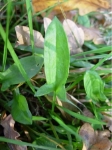
Sorrels: Sheep and Wood sorrels

Sorrels are from the genus Oxalis. Oxalis means "sour" and is named due to its high oxalic acid content. Oxalic acid is considered "toxic" when consumed in large quantities because oxalic inhibits the absorption of calcium. Oxalic acid is not considered a problem when consumed moderately and with a varied diet. Many domesticated vegetables, including spinach and broccoli, also contain oxalic. People who are challenged by gout, rheumatism, and gallbladder and kidney stones should avoid it.
Sorrel is rich in vitamin C (the sour and vitamin C again contributes to the spring cleanse of winter's stagnation in the body). Traditionally it has been used to treat scurvy, fevers, urinary infections, mouth sores, nausea, and sore throats.
If you have never been one to grass your front lawn or the fields and woods near your home... I encourage you to find a good guide book with pictures, descriptions, and healing information and get foraging.
Remember the forager's ethical principle: take only what you need and make certain to leave plenty of plants so they can reproduce and repopulate the area you are wild harvesting from. If you take all the plants you are creating a micro-extinction in that area.
Signs of Fall in the Kitchen
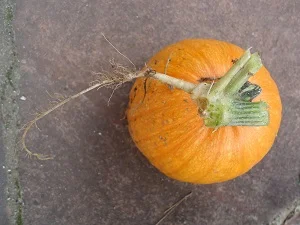
Some signs of fall, in my kitchen, are:
- Squash, squash soup!
- Root veggies of all shapes, colors, and flavors... yummy beets!
- Brussels Sprouts (Create a soup with b. sprouts using the Kale soup recipe, roast the b. sprouts before pureeing into soup.)
- Cabbage!
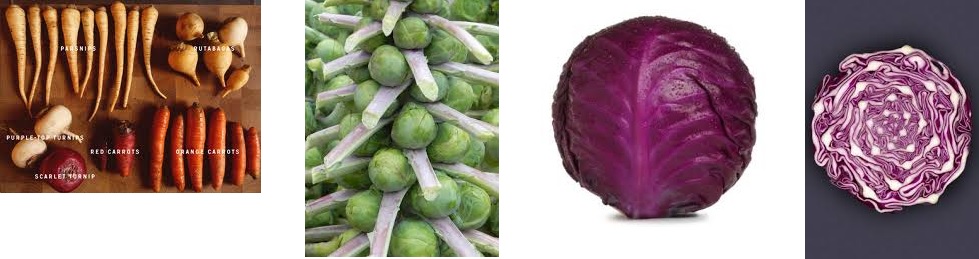
- Sauerkraut... the crock has come out of its summer hiding spot:

To make the first batch of fall sauerkraut, cabbage from the Martin's Farm Stand.
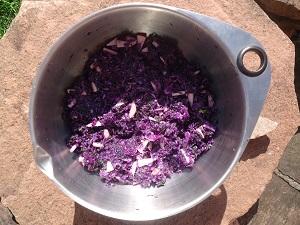
The close up, below, displays the green bits of parsley from my front yard herb garden, the green bits of stinging nettles harvested from my yard (I am assuming the sting will leave during the fermentation process much like it leaves during the cooking process), and the chunks of local apples from the Martin's.
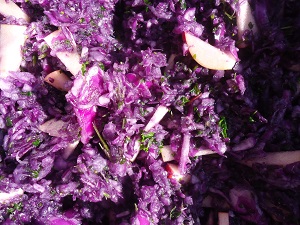
I make sauerkraut because:
- Sauerkraut is good for gut microbes,
- I can use local cabbage and preserve it for weeks,
- It is quick and easy to make a batch that will be about 3-4 quarts (takes me about 30 to 40 minutes including clean up),
- and, after sitting for 10 to 14 days I have 3-4 quarts of food that will enhance meals and fall root veggie salads for 2-3 weeks.
- I have just enough time to ferment another crock with different goodies added to the cabbage: beets, carrots, celeriac, grated (raw) squash, parsnips, turnips, rutabaga.... before the current batch is gobbled up!
For a kraut recipe, click here. No crock to ferment in? No worries, use wide mouth ball canning jars.
Enjoy!
PS I confess, I no longer use the hand grater (see my grating picture in my kraut recipe blog post that I linked above) to grate my veggies. I use my food processor. It cuts the prep time in less than 1/2!
Stalking the Wild Nettle
Nettles are my favorite healing herb. This fact about me is something I do not hide. Now I have plenty of other herb friends, both cultivated and wild, that run a semi-close second in my favorite herb department. Nettles are #1!
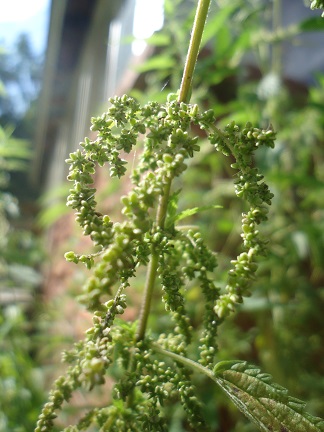
Nettle seeds
In the above picture you are looking at the beautiful tiny seeds that dangle in strands from the nettle plant. These seeds are powerhouses of nutrition for nourishing thyroid health. The dose is 1/4 teaspoon daily. I would take this as 1/8 teaspoon, twice daily.
To dry nettle seeds I cut the entire stalk at the base and hang them upside down in a warm and dry space. Make certain you have a screen or something similar underneath the hanging plants to catch any falling seeds. When they start to dry, I carefully cut each strand from the stalks. I put them in a paper bag, poked with a knife to make many air holes, and hang the bag to completely dry the seeds. Leave the top of the bag wide open for better air flow. You can also use a very fine mesh bag to hang and dry the seeds.
The remaining stalks can be left to dry out the leaves. Again, trim the completely dried leaves off the stalks and store them in an air tight container. You now have dried nettle leaves for adding to soups, stews, sauces, and for making healing tea.

The beautiful nettle plant displaying her seed strands.

Looking straight down at the nettle plant. The seeds strands form a whorled pattern about this beautiful, healing plant.
Nettle's many healing gifts to your body:
- strengthens the kidneys and adrenal glands
- builds natural energy from the inside of the body (which is the opposite of coffee's effects in the body, coffee wears out the adrenal glands, nettles builds and heals the adrenals
- nourishes the hair and skin making you shine with vibrant health
- is an adaptogenic herb, helps a living organism adapt to stress (adrenal health!)
- rebuilds and restores the body cells as nettles is a powerhouse of nutrition
- great for reducing allergies on its own or make an herb honey with raw, local honey and nettle puree, take 1/4 teaspoon twice daily (This is basically making a tincture using honey as the base.)
- great for nourishing the male and female reproductive tracts
- nourishes thyroid health and contributes to body weight balancing
This is but a partial list of all the benefits nettles has in the human body. I suggest you become friends with nettles and learn all you can about her healing ways.
What you are observing, below, is a chicken nettle salad sitting on top of a romaine lettuce, carrot, and cucumber salad. In the upper left corner is a big dose of my late spring, wild leek infused sauerkraut. I got carried away and made 8 quarts! 5 quarts down, 3 quarts left to enjoy!

Chicken Nettle Herb Salad
- left over chicken breast from dinner at the ADK Cafe in Keene, NY. If you are ever passing through here, stop and eat. The food is divine, the meat is local and pasture raised!
- sprigs of fresh rosemary
- fresh chives
- nettle top leaves
- homemade mayonnaise made with 3 tablespoons whipped heavy cream, 1 small egg's yolk, and a dash of yellow mustard. I whipped the cream well, added in yolk and whipped some more, then added mustard. The cream and eggs were both from local, pasture raised animals cared for with love.
The chicken was chopped up, mayo blended in, added in the chopped herbs and nettles, and stirred all together. I plopped this decadent chicken salad on top of my veggie salad (all local veggies from Martin's Farm Stand) that was dressed with my homemade herb vinegar dressing. The finishing touch: wild leek sauerkraut!
Eat healthy, eat whole... your body cells with thrive with vibrant, radiant health!
My Healing Yard

If you have ever wandered up my driveway to socialize, have dinner, perhaps a healing session or a holistic class, or maybe an evening campfire, you know my yard's wildness! The first 2/3's, moving up my driveway, is wild and free. My backyard is overrun with wild plants.
When my Dad visits he always asks: "Do you want me to come over with my lawn tractor and help you mow this place?" He loves to taunt me about my weeds. (Shhh, never call them weeds to their "blossom." Such rudeness hurts their feelings!)
My yard, a disaster to my Dad, is a healing oasis to me. I nurture wild plants that will heal asthma to zits, cancer to psoriasis, provide birth control options, heal your body's inflammation, and everything in between. Annoying weeds they may be to most, to me they are my humble, healing friends that I protect with the gentle fierceness of a mother. And, they graciously feed butterflies, bees, hummingbirds, and so many more wild creatures!
(All of the healing hints I will give, below, for my beloved weeds are but the tip of the iceberg for what each magical plant can be used for. Every plant has so many healing uses!)
Here we have Mullein (It is the tall plant with the yellow flower stalk), an amazing healing plant for asthma and your body's glands. Mullein oil can be rubbed over the thyroid, the ovaries, the testicles, or any gland and you can take mullein tincture to nourish all your glands from the inside of your body.

Yeah, I have a few cats about the home who like to get into the photo ops! The Milk Weed, hanging out here with my friend Mullein, is also good for asthma, constipation, and is reputed to be anti-fertility by the Mohawks. Milk Weed makes a fun, pink jelly for smearing on winter toast... don't forget the butter!
Got zits? Try Dandelion leaf and root tea. Add some Burdock Root and Red Clover flowers to this mix and you have a gentle liver and skin nourishing blend.
Of course, I would add my best friend Stinging Nettles to the above and every healing herb recipe. It just makes good nourishing sense to add nettles!

Red Clover Blossoms!

Dandelion's useful parts: leaf, flower, root. Burdock Root.. you have to dig it OR buy some from The Kent Family Growers or Birdsfoot Farm!

Dandelion leaves... and underneath the leaves, for fall harvesting, are the roots.
Cancer? The above blend does wonders to cleanse/nourish the liver and blood so your immune system can do its job in healing and removing cancer from the body. Add some peppermint (below) as its healing oils and chemical constituents are amazing healing energy for digestive tract issues!

Thank you, Robin, for this wonderful mint variety. Seems the deer like it too! Smart animals.
Want to increase fertility and your ability to conceive? Try a tea (medicinal strength infusion) of Red Raspberry leaf (below), Red Clover Blossoms (picture above), and Stinging Nettles (below). The link above has a "recipe" for a liver detox infusion. Follow the same principles when making your "Fertili-Tea." No simmering of the infusion is needed as you are using all leaves and flowers. Just steep the infusion overnight.

Red Raspberry Leaf, while you are collecting leaves for making tea... eat the berries!

Stinging Nettles, nestled up against my home.
Want to decrease fertility? Chicory Root tea (below) decreases sperm count. Milkweed (see above) decreases female fertility. Queen Anne's Lace, Wild Carrot (below), decreases female fertility and prevents pregnancy.
Red Raspberry Leaf (above) nourishes the uterus and reproductive tract throughout a female's life cycle. My plant intuition says it has to be nourishing for males as well.
There are many herbs to control fertility, enhance pregnancy and birthing, and nourish the reproductive tract. That is a whole book waiting to be written OR grab a copy of Susun Weed's Childbearing Years. This is a great place to start in learning female reproductive herbs.

Chicory: the root is used as a medicinal infusion to decrease sperm count.

Queen Anne's Lace flower head: the seeds are used to prevent pregnancy.
The below Black Eyed Susan patch adorns the yard behind my house and garage (and you are only seeing about 1/5 of this flower patch!). I leave it wild purely to heal my heart and soul (and my cat's as well... all 4 cats seem to love their wild flower jungle!).
Native Americans used the plant for internal parasites, skin wounds, earaches, snake bites, and the common cold.

Wild plants are wonderful. Befriend one today! Paula
PS Stay tuned for Healing Backyard Plants, Pt 2
AND
The Healing Powers of the Great White Pine