
Shopper's Rut: Why do I need to avoid this?
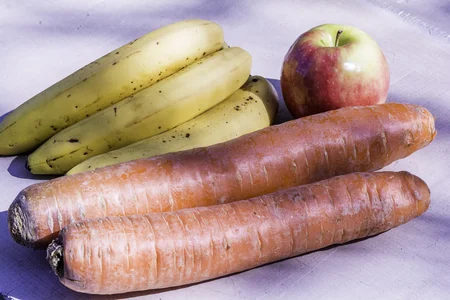
Shopper's Rut Defined: buying the same 'ole fruits and veggies every week:
- bunch of bananas
- few apples
- an orange or two on occasion and maybe a pear here or there
- stock of broccoli
- pre-washed & prepared lettuce of some sort
- carrots
- maybe a cuke or bell pepper
- perhaps some celery because it is easy
Why Should You Avoid This Same 'Ole - Same 'Ole Produce Shopping Experience... (Hint: to avoid eating the same things day after day, week after week!)
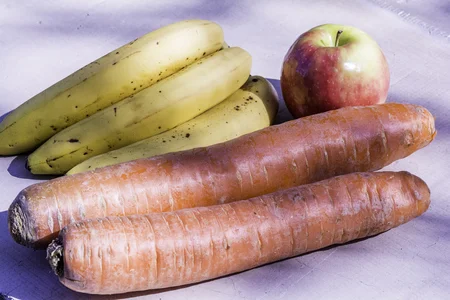
Shopper's Rut Defined: buying the same 'ole fruits and veggies every week:
- bunch of bananas
- few apples
- an orange or two on occasion and maybe a pear here or there
- stock of broccoli
- pre-washed & prepared lettuce of some sort
- carrots
- maybe a cuke or bell pepper
- perhaps some celery because it is easy
Why Should You Avoid This Same 'Ole - Same 'Ole Produce Shopping Experience... (Hint: to avoid eating the same things day after day, week after week!)
- Variety in fruits and veggies creates variety in the vitamin, minerals, anti-oxidants, and phytonutrients your body is graced with. There are so many nutrients in food that we have not yet discovered. Opting to eat produce that varies with the season opens your body, your body cells, to receiving all of these nutrients.
- Phytonutrients fight oxidative stress, inflammation, and allow your body to heal for disease prevention and disease healing (You want this, trust me and yes, your body is capable of healing from any disease. It is how we are genetically programmed. The "you must take this drug for the rest of your life" medical mentality erases the fact that the body has the ability to heal.).
- Mixing up your fruit & veggies provides your body with different kinds of fiber, the roughage in food. Fiber, complex carbohydrates are good on so many levels. See below for some gut bug info.
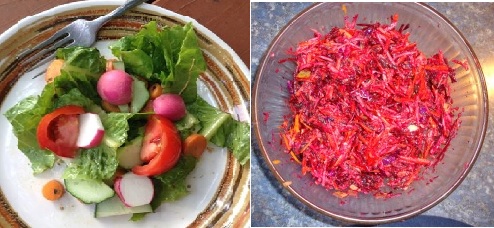
- Your taste buds, eyes, nostrils, hands, and brain will be happy for the variation in sensory stimulation. All the colors, textures, smells, and tastes are an amazing way to stimulate your neural pathways. Think of that beautiful summer salad on your plate and then the slow rotation into fall and winter veggies giving us tantalizing root veggie and cabbage slaws. Then there is my favorite winter veggie... beets! A winter, cooked beet salad with walnuts & feta cheese is a taste bud tantalizing change from the same ole - same ole steamed or sauteed broccoli.

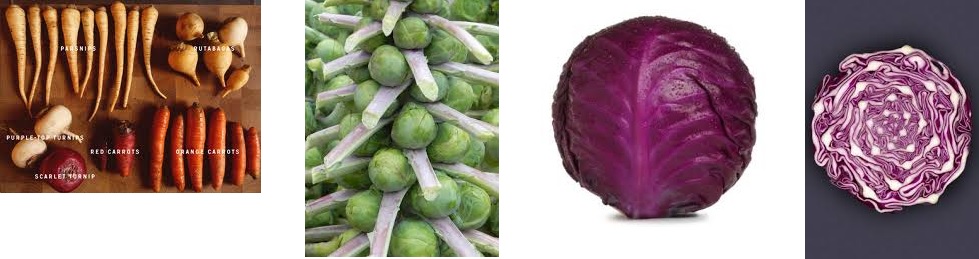
Above picture borrowed, with permission, from the website of Martin's Farmstand, Potsdam, NY. Look at the seasonal abundance available in Northern NY! Go to their website and have fun clicking on the "previous newsletter" links. The pictures from the farmstand, the farm fields, and gardens are amazing. Lush and juicy, fresh, local, and seasonal food everywhere! And all this food is tended to with love by wonderful people. For your fall & winter veggies... give them a call.
Looking for a winter CSA in Northern NY State?:
- Kent Family Growers,
- Birdsfoot Farm,
- LittleGrasse FoodWorks OR check out
- GardenShares website to find a farmer close to you that sells produce, meats, cheeses, milk, herbs, spring plants, etc.
Try these ideas to eat more variety in your fruits and veggies:
- Get Creative in the Kitchen
- Eat Seasonally Fruits & Veggies & Naturally Rotate Your Phytonutrients
- Use Root vegetables instead of grains to add plenty of complex carbohydrates and starches to your eating habits. This is good gut pre-biotic food that feeds the gut bugs you want to survive and thrive in your intestinal tract. A healthy gut microbiome is a self-responsibility tool in your personal medicine bag to prevent intestinal disease, auto-immune diseases, cancer, and a host of other preventable human ills. And food is your easy, at home medicine!
- Grate veggies on a grater (or use a fancy spiralizer); use these grated veggies instead of pastas. Depending on the veggie, I use some raw and gently saute' others.
- Learn what fruits & berries grow in your area, what their season is, and freely indulge in them.


More recipes: http://www.paulayoumellrn.com/recipes/
Tip for the Week, Month, & Year: Create seasonal variety in your whole food eating habits not just around the produce you eat. Variety bathes your awesome body cells in different nutrition daily, weekly, and with the seasons of the year.
Your body's health WILL thank you! (Your local farmers will thank you too.)
Signs of Fall in the Kitchen
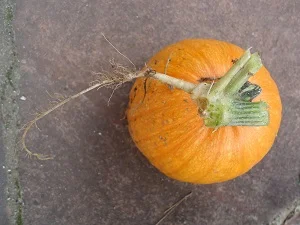
Some signs of fall, in my kitchen, are:
- Squash, squash soup!
- Root veggies of all shapes, colors, and flavors... yummy beets!
- Brussels Sprouts (Create a soup with b. sprouts using the Kale soup recipe, roast the b. sprouts before pureeing into soup.)
- Cabbage!
- Sauerkraut... the crock has come out of its summer hiding spot:

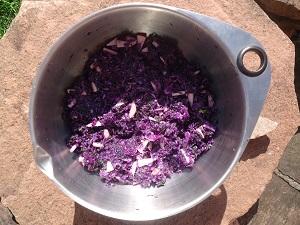
To make the first batch of fall sauerkraut, cabbage from the Martin's Farm Stand.
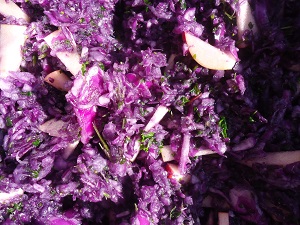
The close up, below, displays the green bits of parsley from my front yard herb garden, the green bits of stinging nettles harvested from my yard (I am assuming the sting will leave during the fermentation process much like it leaves during the cooking process), and the chunks of local apples from the Martin's.
I make sauerkraut because:
- Sauerkraut is good for gut microbes,
- I can use local cabbage and preserve it for weeks,
- It is quick and easy to make a batch that will be about 3-4 quarts (takes me about 30 to 40 minutes including clean up),
- and, after sitting for 10 to 14 days I have 3-4 quarts of food that will enhance meals and fall root veggie salads for 2-3 weeks.
- I have just enough time to ferment another crock with different goodies added to the cabbage: beets, carrots, celeriac, grated (raw) squash, parsnips, turnips, rutabaga.... before the current batch is gobbled up!
For a kraut recipe, click here. No crock to ferment in? No worries, use wide mouth ball canning jars.
Enjoy!
PS I confess, I no longer use the hand grater (see my grating picture in my kraut recipe blog post that I linked above) to grate my veggies. I use my food processor. It cuts the prep time in less than 1/2!
Souped Up Soup!

Yesterday I posted about my "take a peek into the produce bins and concoct some sort of soup for dinner" experience in the kitchen. I commented that tonight's soup would be similar but with sautéed celery instead of the kale. (My apologies on the typo about "now add the onions and garlic" as it was supposed to be add the onions and kale. I fixed that boo-boo.)
OK, so the planned soup just got souped up. I discovered 4 buttercup squash, from Old Market Farm, in my garage last eve. Now I did not exactly lose them, they were just momentarily forgotten. I decided to get them into the house before they froze and started rotting on me.
So I roasted the squash this AM. Revving the oven up in early AM helps to warm the chilled downstairs after a cool night.
To make this soup quickly, on an eve after working all day: get the squash steaming first, before you sauté the celery and onions. Cut a small to medium buttercup squash in half, remove seeds, and put into a pot of water that has about 1 inch of water on the bottom. When water starts to boil, reduce heat to a gentle simmer, and cook squash for about 20 minutes. It will be ready when you finish with the sauté and soup prep.
Kitchen Advice: Never boil your veggies in a pot full of water; steam in the least amount of water you can get away with and not go dry. This goes for potatoes you are cooking to mash. Less water means less nutrient loss. Pour off cooking water into a coffee mug, let cool, and drink. Get every cell enhancing mineral and nutrient any way and every way you can!
Now get going on the celery & onion saute'!
- Sauté the medium sized onion, cut into small chunks, and the celery leaves in bacon fat from local, pasture raised pigs, no nasty curing chemicals added. (Use whatever you like for gentle sautéing: pasture raised butter, coconut oil... I would avoid most vegetable oils but that is another blog post and story!) The celery will sauté quickly, add the celery after the onions are just about finished. This way you do not over cook the celery leaves.
- Add approximately 3 1/2 cups of goat's milk to the blender with 3 big cloves of the Birdsfoot garlic.
- Add the onion and celery to the blender.
- Plop in big scoops of the squash, at least use one half of the cooked squash. Be careful scooping the squash out of the shell as it is hot and a steamed squash gets mushy not rigid like an oven roasted one. (Add lots of butter and sprinkle with curry, the other half of the squash, while it is still hot so the butter melts. Mash the butter and curry into the squash. Put into a dish and take to work tomorrow!)
- Sprinkle in, oh maybe 1 tsp. of medium heat curry powder (Nature's Storehouse or the Potsdam Food Coop). I use more curry with squash or pumpkin soup because the squash flavor can handle it without being overwhelmed. Besides, the spices in curry are amazing healers!
- Blend until the consistency and smoothness you want in a cream soup is achieved.
- Pour in soup pot and gently warm.
- Ladle into soup bowls and add a pinch of unrefined sea salt, if desired.
Don't forget the beet gratings! Beets soup up the soup in several ways:
- fiber
- nutrients
- raw veggie with dinner
- contrasting color to the pretty orange soup (this artsy cooking style feeds the heart, mind, and soul!)
- beets are used as cancer therapy in Germany and Russia! Why wait to use as therapy; prevent health problems now!
Quickly grate the beet using my metal cheese grater. I sprinkled the beet gratings on top of this generously curry seasoned cream of squash/celery soup.
If the pot is big enough, or the eaters few enough, you will have left overs for lunch or later dinners this week! OR... freeze in a wide mouth, quart Ball canning jar (leave head space for expansion during the freezing process) and enjoy in a week or two!
Cheers and happy, healthy cooking!
Cooking Like a Kitchen Artist
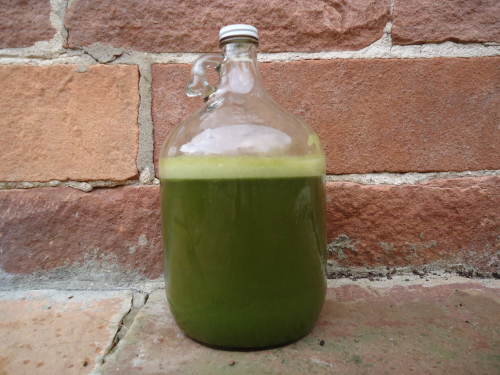
Herb Vinegar for home garden flavored salad dressings: raw, apple cider vinegar with rosemary, basil, oregano, parsley, thyme, cilantro, tarragon, mint, and nettles. I buy my vinegar from Martin's Farm Stand, add my garden herbs, and blend in the blender. Pour back into the jar, with a funnel, and enjoy all year. Put 1 quart of vinegar into the blender with the herbs and pour back into the gallon jug. Shake to mix herbs with the whole gallon.
Back a couple of blog posts, Cook Book Or Not?, I mentioned I would write about cooking like a kitchen artist. Now is the time for you to: read on, get out your local foods, and start creating with your kitchen artist's palette!

A common challenge I hear from clients and health class students is: “How do I make my cooking easy, what do I use for spices, what can I do that is different….?
First Thought: Do what is easy and familiar, make your favorite foods! The key is to turn them into whole food recipes with fresh, local, and seasonal foods.
Check out this hidden page “How to Make Any Recipe a Whole Food Recipe” to get you into the ‘whole food’ recipe make-over swing of things.
Trying to get more vegetables into your life? People get too overwhelmed by ALL the vegetables that are available in the supermarket. Common questions I hear from clients are: WHAT do I do with all of these, what goes with what, how do I cook them…..?”
Second Thought: Learn to eat in season. If the veggies you are eating are only available at certain times of the year, it makes your choices narrower at that particular time of the year. Being overwhelmed by the plethora of choices is common in today’s culture of being able to eat broccoli, strawberries, asparagus, and every other fruit or vegetable 12 months out of the year. Create meals using vegetables that are available locally and in season. This makes the choosing easier, because there is not so much variety available all the time. It also allows you the opportunity to have a diet that is varied over the course of the calendar year.
Helpful hints around seasonal eating:
- I believe seasonal eating would help to cut down on food sensitivities as well. When your body is not being subjected to the same food, all the time, you are much less likely to develop food sensitivities and intolerances. Local, seasonal eating was nature's way of varying our diets.
- When you eat locally grown food you help cut down on the transporting of food all over the globe. This can have huge impacts on the environment when we are using less fossil fuels moving food around the earth.
Examples of seasonal foods for Northern NY State:
Spring: spinach, asparagus, green onion, early lettuce, rhubarb, wild leeks, spring sorrel, peas
Summer: leafy salad greens, summer squashes, seasonal berries from strawberries to late summer raspberries & blackberries, tomatoes, peas, strawberries, blueberries, raspberries, gooseberries, currants, juneberries, cherries, garlic, carrots, new potatoes, fresh herbs, corn, onions, melons…
Fall: root veggies, winter storage squash, cabbage, apples, pears, peaches, fall raspberries
Winter: stored root veggies, kale & collards still in the garden, canned tomatoes and veggies, frozen veggies and berries
Many websites offer their version of a “what produce is in season” charts for the geographical region you live in. www.gardenshare.org
http://www.simplesteps.org/eat-local
When you eat seasonally, what you eat changes with each seasons. Your meal planning and preparing takes on a rhythm of simplicity. I cannot stress this enough: keep it simple. Do not over think things. Wing it in the kitchen. If the meal was a winning combination, do it again. If the meal is not the taste you were looking for, eat it with gratitude for the farmers who grew the food, the earth/water/sun, etc. that provided the growing environment, and the work you did in the kitchen. Make a mental note (or keep a cooking journal, if that is easier for you) and do not repeat that particular cooking concoction.
If you think about vegetable dishes, they are the same things just cooked a different way. One fall or winter night you might roast potatoes, carrots, onion, and parsnips and another night you might throw those same types of veggies into a beef or chicken stew. On another night you might stir fry them and add meat, fish, scrambled eggs, or beans. Another night you might gently steam them, mash them up with grass fed butter and unrefined sea salt, and serve with a side dish of chicken, beans, or fish. This is what I mean about simplicity and not over thinking.
To these above meals add a grated root veggie salad using different root veggies: rutabaga, celeriac and beets with some finely chopped cabbage. Toss with an herbed, homemade oil and vinegar dressing and voila, dinner!

Summer cooking will be more tomatoes, eggplants, peppers, yellow squash and zucchini, and other summer veggies enjoyed with green, leafy salads and raw carrots, baby beets, and cucumbers.
Let go of the idea that you have to work from a recipe and cook up this fabulous gourmet meal every night. 100 years ago, people ate what they had on hand, in season, with no regards for cook books and recipes.
In my herb garden I grow: mint, basil, cilantro, parsley, oregano, thyme, rosemary, tarragon, sage, marjoram, certain edible flowers, etc. It is so easy to step outside, cut a bunch of herb sprigs and brighten up a raw salad or add to cooked vegetable just before you serve them. I do not recommend cooking the fresh herbs as you will save the fresh flavors for your eating enjoyment.
I keep standard herbs and herb blends handy to spice things during the non-garden, no fresh herb months:
Italian spices: rosemary, thyme, oregano, parsley, basil, marjoram
Curries: mild, medium, or hot to your liking
Chili type spices: Chili powder, cumin, turmeric, and coriander
Pulled pork blend: (I also put this on chicken, in chili, and in stir fries if I am looking for this particular taste): ground pepper, cumin, garlic powder, onion powder, paprika, chili pepper, thyme, all spice, turmeric Use 1 Tbsp. of each spice except 1 ½ tsp. thyme, allspice and turmeric
Chinese 5 spice for Asian stir fries
Cooking and eating is wonderful, tasty fun! Relax and enjoy the process for good health in mind, body, and soul!
PS
I was making chocolate chip cookies this AM, for my boy's school lunches, and I reminded myself of a wonderful Whole Food Recipe Conversion tip:
- Never use 100% oat flour to make cookies. Why you may ask? Not because the flavor isn't yummy... it is because the cookies are very crumbly. Frankly, they can fall apart if handled roughly. Now eating cookie chunks and crumbs is an ok thing but a whole cookie that does not fall apart has a certain appeal!
OK, recipe... I know I will get emails asking where is the recipe? See below.

The cookie recipe began in this Betty Crocker cookbook!
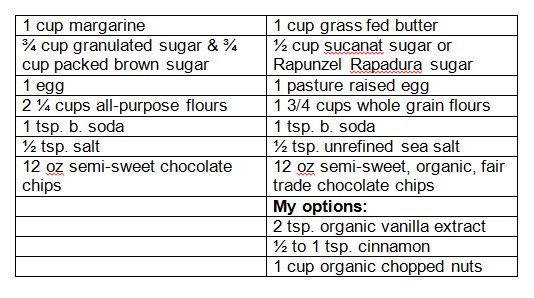
The below recipe is the chocolate chips cookies, the left side is the original recipe and the right side is the converted to whole foods recipe.
- Heat oven to 375 F.
- Mix butter, sugar, and egg. Add vanilla here if using and I encourage vanilla!
- Stir in flour, b. soda, and salt. Add cinnamon here, if desired.
- Add in chocolate chips and nuts (if using nuts).
- Dough will be stiff. Allow it to sit for 5-10 minutes as the whole grain flours continue to absorb the liquids. If dough is not stiff enough for cookie dough consistency, add 1 tbsp. of flour at a time to get it to the necessary stiffness of cookies.
- Bake one cookie for 8-10 minutes as a tester.
- If all looks good with that one cookie, bake those cookies up & enjoy!

The finished, yummy, oat flour chocolate chip cookies! They do not last long!
Comments, thoughts? Write me a note in the comments below. Happy day to you!
Cook Book...
Cook Book...
To write or not to write,
That IS the ???
So I have hit the 100th person to ask me: Are you going to write a cook book?" or "When are you going to write a cook book?" I am celebrating this milestone (like celebrating the 100th person to cross the threshold of a new store or business) by chatting about it here.
Cook book or not?
I have to say, "nah, not in my plans." I thought about it for a bit and here are my issues... issues, we always have issues!
1. I am a "just throw it in a bowl" kind of gal. For example, foods like cakes, cupcakes, cookies, muffins, and pancakes all have the same basic ingredients. Some have more liquid, i.e. pancakes, while others have more flour, i.e. cookies. What I throw in the bowl depends on the consistency of the batter or dough I am trying to make.
So, to make a chocolate cake I do something like this (and hope for the best!):
- 2-3 eggs whipped up and add 1/2 to 3/4 cup melted butter (these two ingredient amounts depend on whether I am making a one or two layer cake)
- 1/2 cup sugar, unrefined, of course (I may use 3/4 if making 2 layers and it is not for my kids, most people like sweeter cakes.)
- 1 tbsp. vanilla
- 1/2 to 1 cup milk, again depending on the layers
- 1/2 tsp. baking soda
- 2 to 3 tbsp. baking powder depending on the flour (oat flour and I use less b. powder, if it is millet / quinoa / teff / amaranth flours I use more b. powder)
- 3-6 tbsp. cocoa powder depending on # of layers and how chocolate flavored I want the cake
- Enough flour to create a cake batter consistency, which is thicker than pancakes but more liquid than cookies
Set batter aside for 5 - 10 minutes to see how the flour soaks up the liquid. After 10 minutes, if the consistency is cake like, good to go. If it is too runny, I add flour a tiny bit at a time. Too thick? I thin with a bit of milk.
So, that is how I cook everything. A little of this and a little of that. Who wants a cook book written like this? I would get boo-ed and rotten tomatoes thrown at me! Most people want exact measurements.
2. Meal cooking is a process of looking at the local, seasonal produce on hand and having fun with it; playing with the ingredients, herbs, and spices. When you play with food for long enough, cooking and creating in the kitchen becomes second nature.
I suggest picking up a couple of good vegetarian cook books* (cook books that show case seasonal produce) and then read them like novels. Next, get cooking. After a bit of practice in the seasonal kitchen, I will say it again, cooking becomes second nature. It is an art work. Relax, breathe deeply, and let your creative nature just flow.
Add your favorite protein sources and whole grains to the yummy seasonal veggies and voila'... you have dinner (suggestion: make enough for lunch leftovers!).
If you have blood sugar control challenges (diabetes) eat whole grains in serious moderation, not at every meal, and up the intake of veggies instead.
3. I visited the SLU book store and checked out the cook book section. It was scary! There were 5 shelving sections of cook books with 7 shelves in each section. 35 shelves of cook books and only 2 of the cook books on the shelves had more than one copy. One was the original MoosewoodCook Book the other was a smoothie "recipe book", I believe. All of those 35 shelves were loaded with single copies of cook books on every topic and health promoting diet imaginable! That was a huge wow for me!
The 5 rows of cook books at the SLU Book Store:

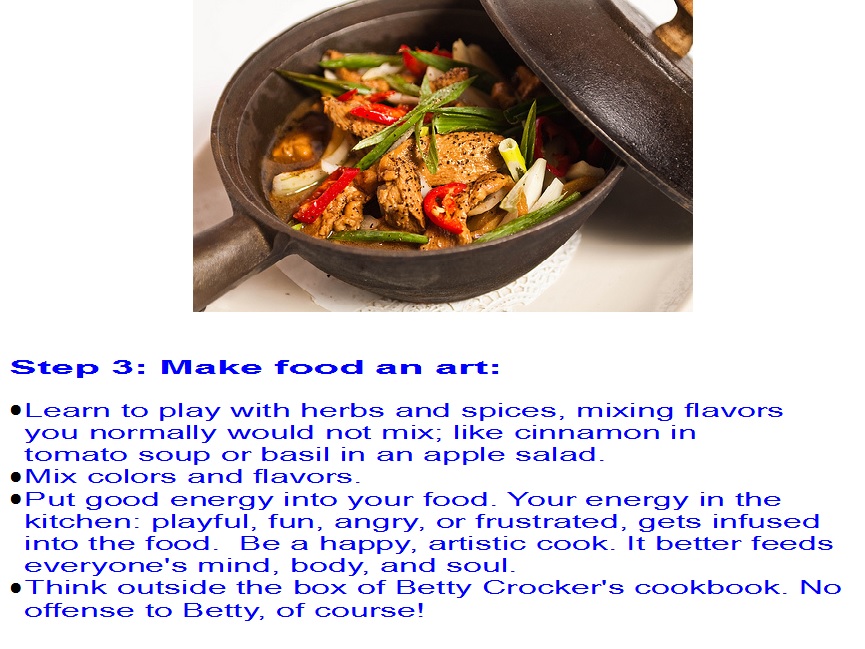
3. I am all about making food an art form. The kitchen is your studio, food is your medium, and the kitchen utensils are your artist's tools!
Watch for my follow up post: How to Cook Like an Artist
Be well, have fun in the kitchen! Paula
*Cook Books you might find useful:
- Home Gardener's Month By Month Cookbook, Marjorie Page Blanchard
- From Asparagus to Zucchini
- Recipes from the Root Cellar, Andrea Chesman (She also wrote Serving Up the Harvest)
If the cook book uses refined ingredients (refined, all-purpose flour, bleached or not)... use your whole food kitchen skills and swap out the refined ingredients and add in 100% whole food ingredients. Need help with this? Give me a shout, read that section in my book (Hands On Health: Take Your Vibrant, Whole Health Back Into Your Healing Hands), or zap me an email and I will send you my educational handout.
If you do not like the high fat ingredients in the Home Gardener's Cookbook, swap out for ingredients with fat contents you are comfortable with. Myself, hey, bring on the butter! (From Pasture Raised Cows, Please!)
Get cooking like the seasonal kitchen artist you can be!
PS My second book, a book of inspirational words to help you put the action steps in my first book, well... into action, was picked up by a publisher yesterday! Stay tuned as I keep you informed of the publishing process!
I call this book of words my "yoga poses" for the body, mind, and spirit book. No, that is not the book's title... that secret will be released at a later date!
Today, to celebrate, I am off to climb a high peak in those amazing ADK Mountains!

White Face from last summer's hiking ... today I am going up Dial!
Fun, Easy Food with Lentils and Seasonal Veggies!
1. Start with a tbsp. or two of yummy, grass-fed butter 2. Put an amount of the cooked lentils you are willing to eat
on your plate. (Lentil cooking instructions below.)
3. Add butter to lentils and mix in.
4. Sprinkle curry powder, to taste, over lentils and mix in.

Like so!
5. Then I add raw nuts or seeds of choice. Any nut or seed is yummy: pumpkin, sesame, sunflower, poppy, walnuts, brazil nuts, cashews, almonds, pine nuts, hazelnuts....
Tonight's taste sensation was slivered almonds and chopped cashews. Yes, I know these are far from local. I figure 85-90% of my food is from local farmers. A little nuts, once in a while, is a delicious indulgence!
I served it with a shredded carrot and purple cabbage salad that I dressed with some raw sauerkraut. Sorry, forgot to take a picture of the salad before I ate it! It was so yummy, I could not wait!
EASY COOKING OF LENTILS:
Boil 1 1/2 cups of water.
Add 1 cup of red lentils.
Bring water back to a simmer, gently.
Keep pot covered, shut off heat, and allow lentils to "steep".
Shred your carrots and cabbage to make your salad. Add shredded beets too for color, healing food, and another sweet taste in the salad. Chunks of chopped apples are fun too!
When you are finished preparing the salad, put the lentil dish together, and enjoy.
THOUGHTS ON SEASONAL FOODS AND SEASONAL EATING:
Eating seasonal foods makes meal preparation easier. When your choices are only what is growing locally, in season now OR what can be stored and eaten over the fall and winter, you save yourself from the tyranny of choices in the supermarket.
When we change our food with the seasons, meal preparation becomes simpler! No more standing in the supermarket, overwhelmed by every fruit and vegetable that grows in every season, from every corner of the Earth, available to us every day. It makes our heads dizzy with what we are supposed to create for a meal tonight and every night this week.
Go with local and seasonal. Your choices each season are slimmed down; planning and cooking becomes easier. The process, including eating, becomes more enjoyable. You will look forward to each season and what new taste sensations the season has to offer.
I also find myself looking forward to the end of seasons: NO MORE asparagus! (But I so look forward to it again next spring!) Funny, I am not certain I would ever get tired of fresh, local strawberries...
I am also ready to say goodbye to "green" salads in the fall and I welcome the hearty taste of cabbage and root vegetable slaws. When spring comes, I crave those green salads again. The cycles of life are a beautiful thing!